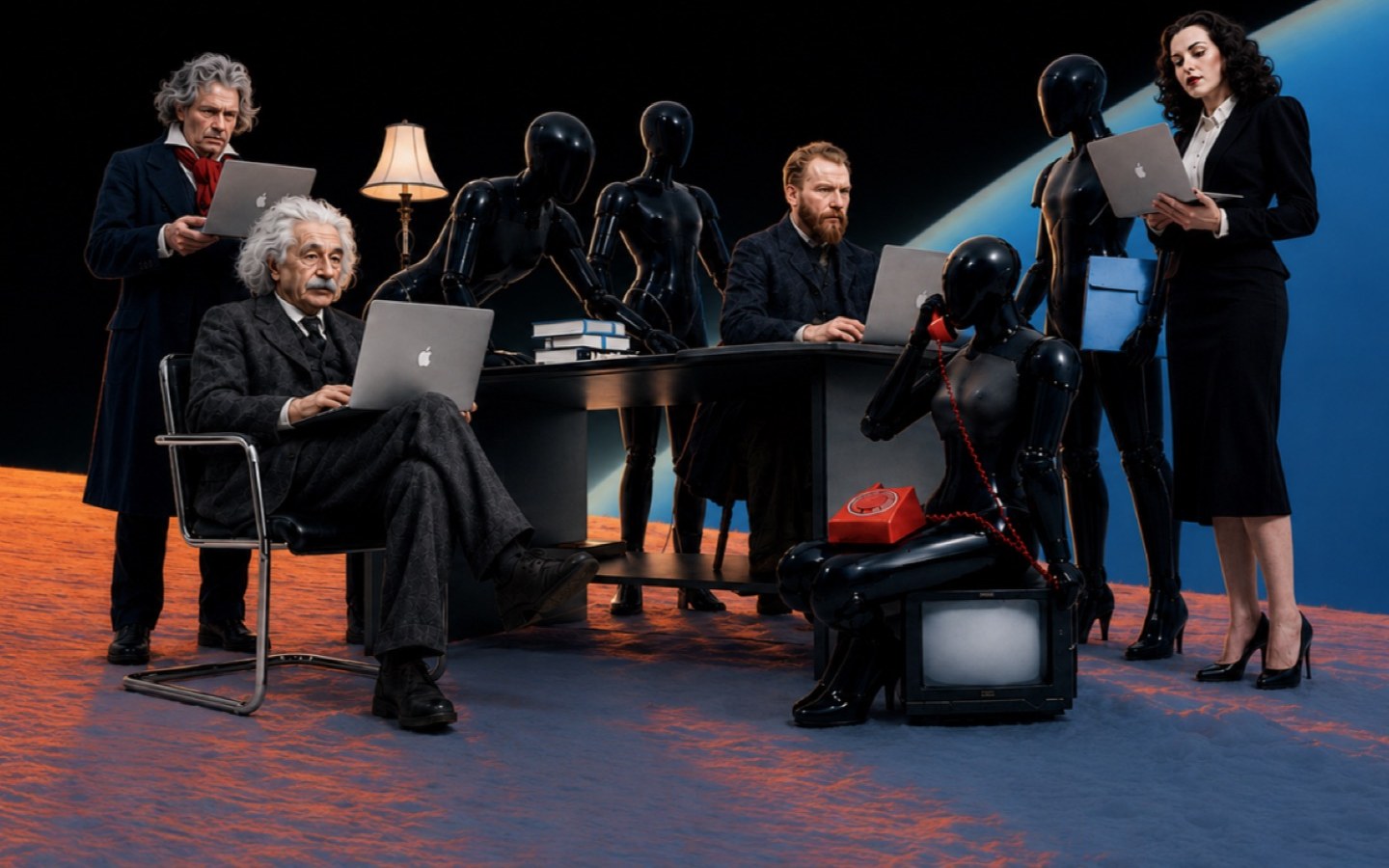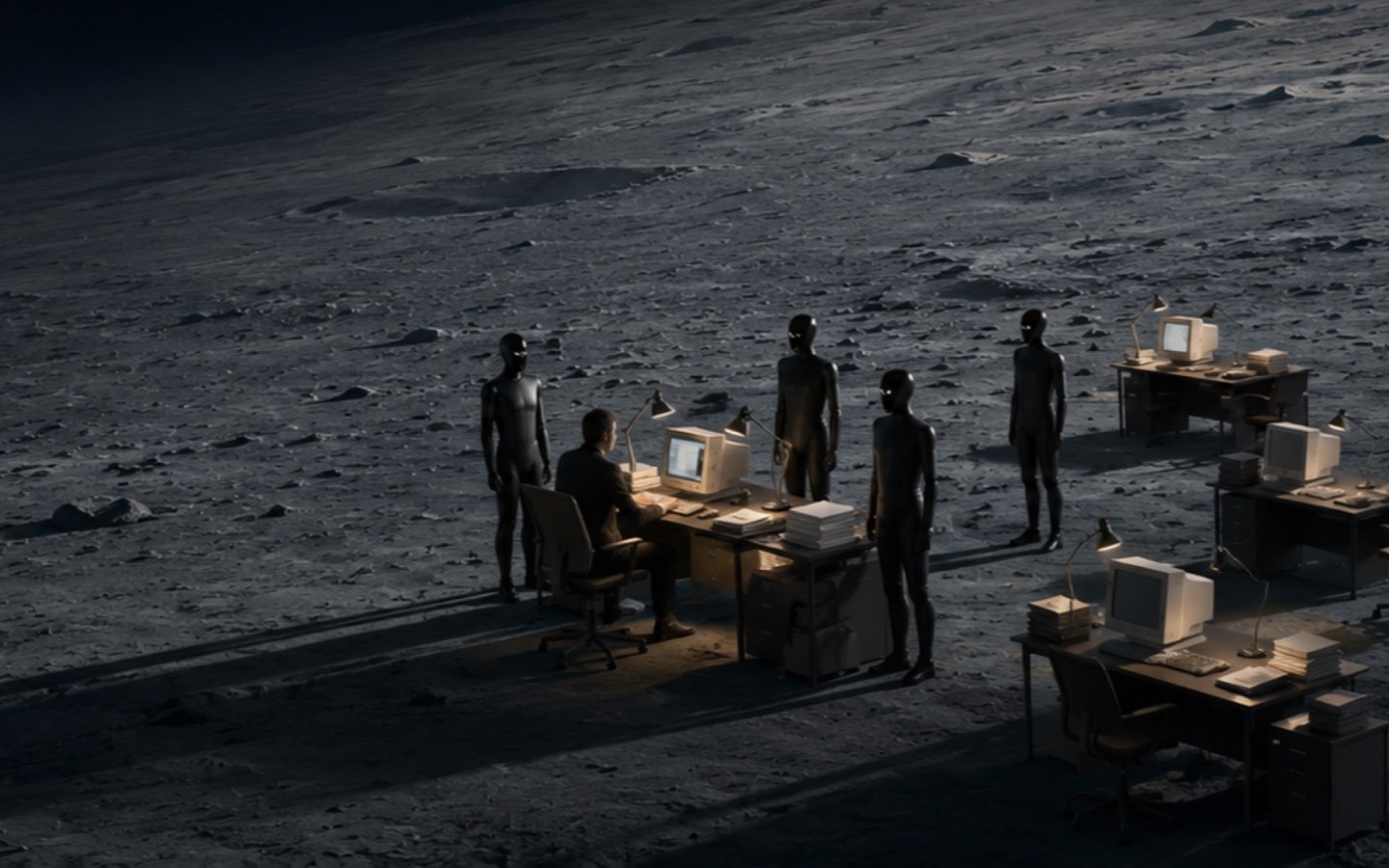



Tutti is an Italian word found in musical notation. It later became the name of our product. It refers to an entire orchestra: dozens of musicians, across different parts and different instruments, coming together with full force.
The Same A
Harmony begins with A.
The lights dim. A row of small lamps turns on across the music stands. Before the orchestra begins, it does one thing first.
The oboe stands and plays an A. That note is set as the standard: 440 hertz, like a taut line extending outward. The violins bring their bows in, and the smell of rosin rises. The cellos, horns, flutes, and timpani follow one by one, tuning themselves to that line. Dozens of people, dozens of instruments made of wood, brass, gut strings, and drumheads, slowly settle into the same frequency over those few seconds.
Before the symphony begins, they come into tune.
Karajan With His Eyes Closed
A shared starting note is not enough. To stay in sync for two hours, something else is required: listening.
When Karajan conducted the Berlin Philharmonic, he often closed his eyes.
A young musician once did not understand and asked him, "Maestro, if your eyes are closed, how are we supposed to know when to come in?"
Closing my eyes removes the interference of sight. The musicians gain a kind of freedom. They become more focused on listening to one another, and reach the deepest resonance.
Herbert von Karajan
It is not only the conductor who needs to listen. The musicians need to listen too. Only by hearing the person next to them can they know whether their own sound should rise or fall.
Everyone on stage is an expert in their own part, with their own score in hand. They share the same hall, listen to one another, and constantly tune themselves against everyone else. The conductor lifts a hand, and the whole orchestra begins to resonate. That is how great symphonies are made.
What we lack today in working with AI is exactly this kind of space: a "concert hall" where every player can coordinate with the others.
The Messenger Stitching Everything Together
Useful tools have never been more abundant.
Your workflow probably already includes more than one Agent: one for strategy, one for code, one for copy optimization, one for image generation. Taken individually, each one is quite capable.
But once you actually need them to work together, the problem appears: by default, Agents work separately. Your conversations with them and the outputs they produce do not flow into one another. The upstream creative direction produced by Agent A does not naturally move downstream to Agent B.
You ask Claude to build the frontend. Then you want Codex to continue debugging. So you have to explain the entire project state all over again. You step down from the podium and become the messenger between separate windows: repeating one side's conclusions to the other, copying, pasting, downloading, uploading. Again and again.
You, who should be conducting, become the courier between them.
All Together: Tutti
To let Agents "see one another," we first need to bring the space back.
Tutti means all together. It is a marking in a score.
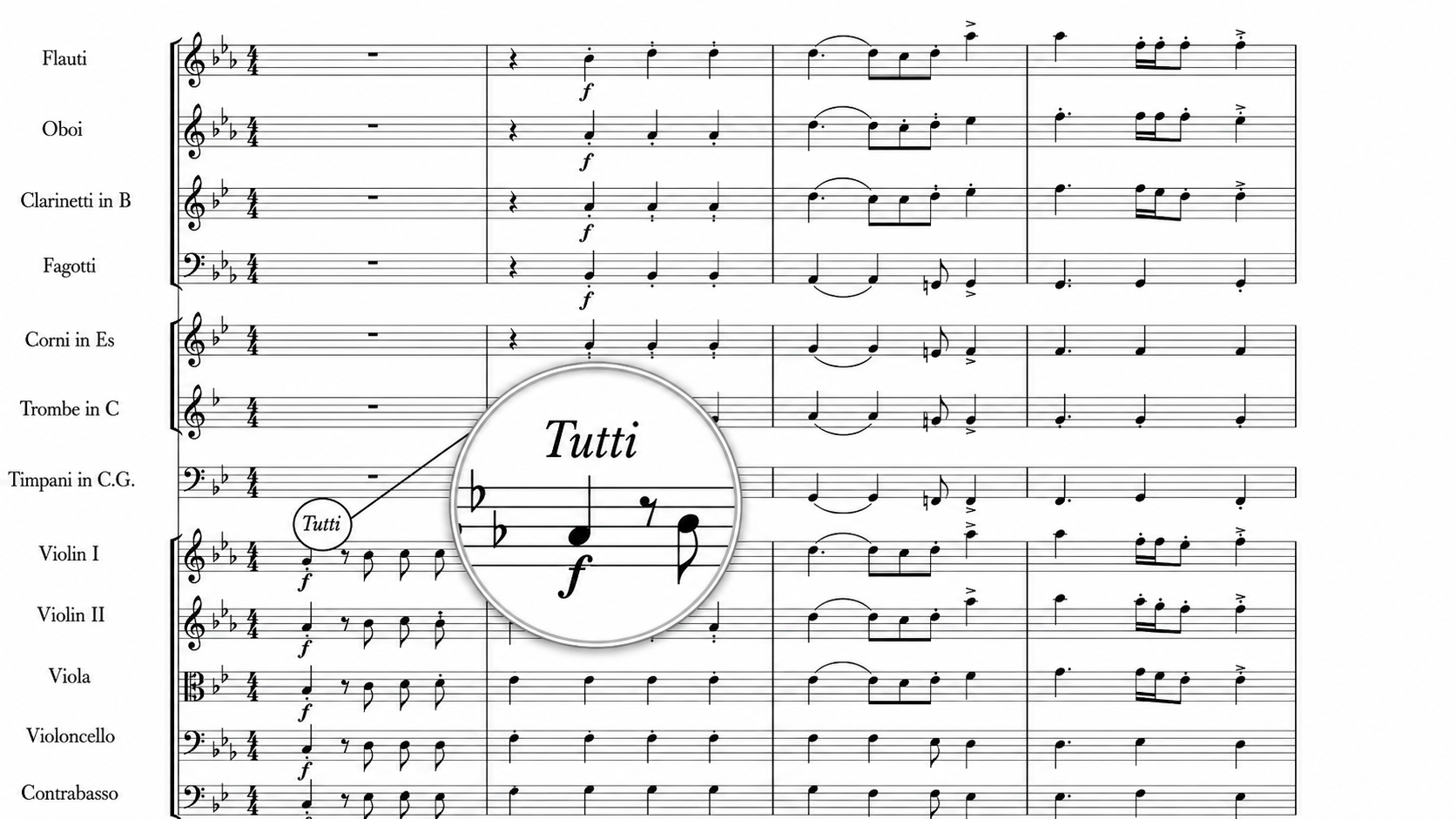
Before it appears, there is often a stretch of rest. You count the beats and wait. Then Tutti arrives. Every part enters at once, and the empty space is suddenly filled with sound.
The product we are building is called Tutti. What it wants to restore is that space where every participant can listen to one another and play together.
This space already has the conditions needed for everyone to come into tune: Agents can listen to one another, share the same live workspace, and immediately pick up each other's context, files, application outputs, tasks, and more.
So they can coordinate. They can come together.
And what you need to do is close your eyes again and pick up the baton.
With Tutti, be Tutti.