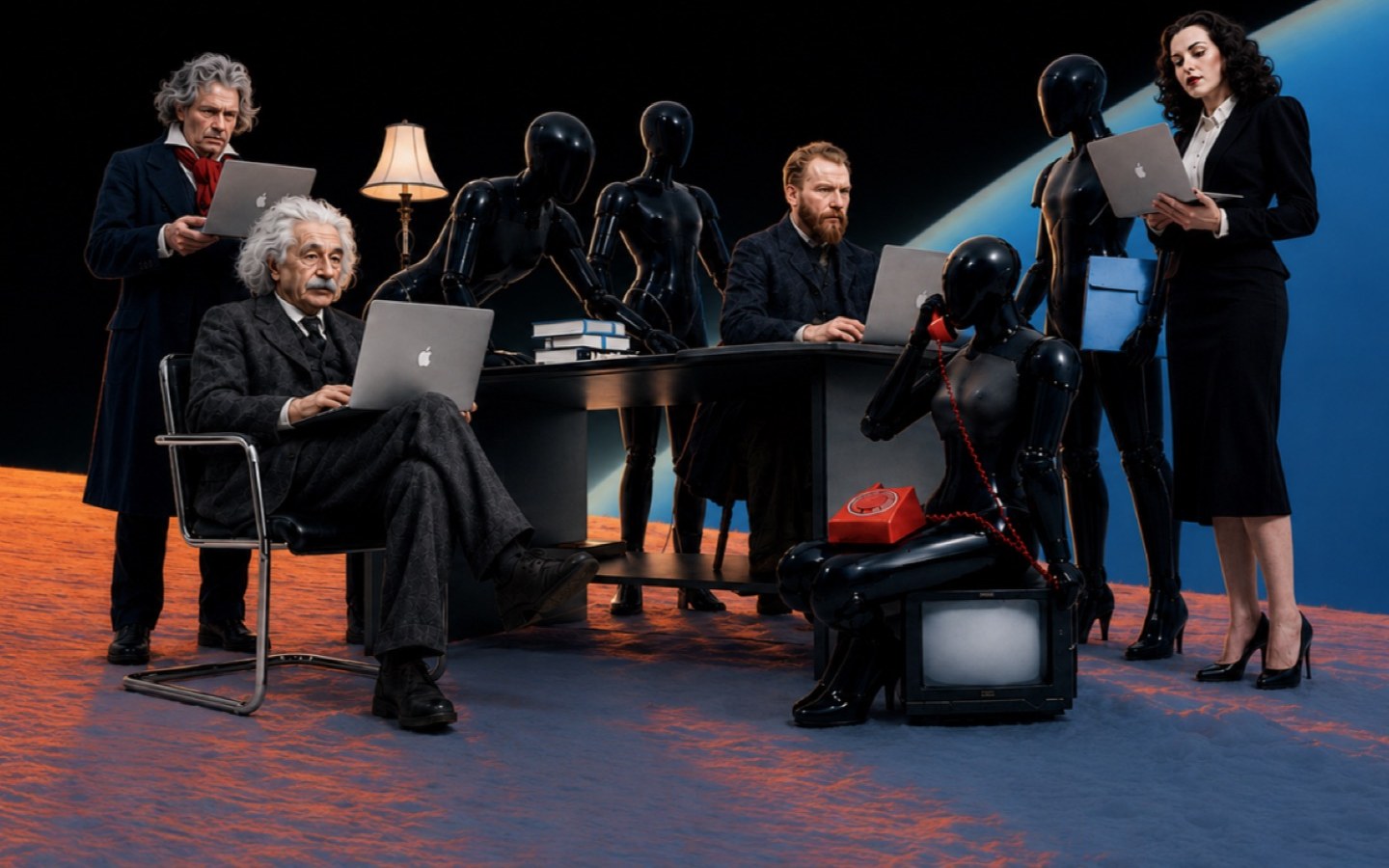

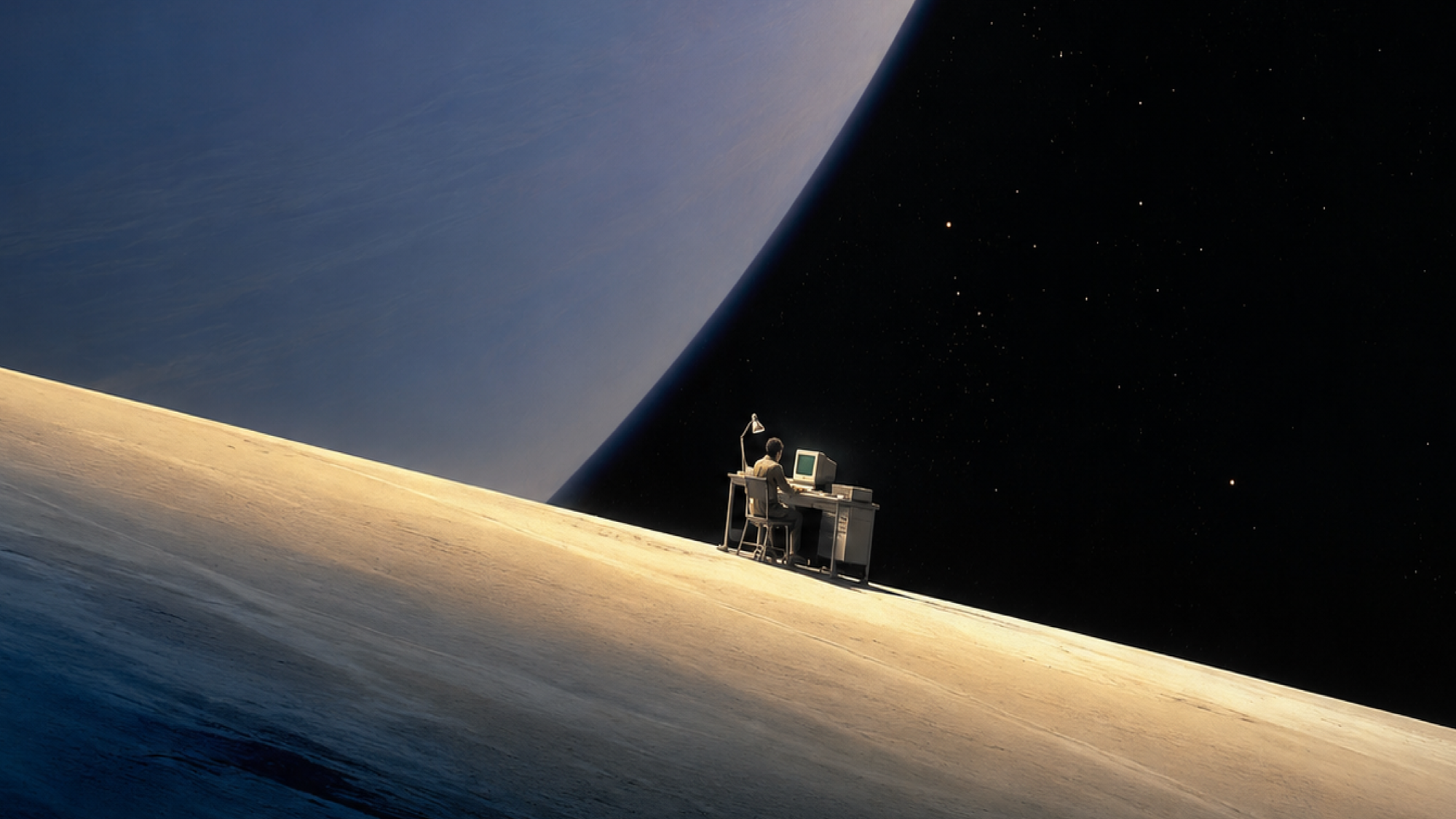

Before Tutti, we spent 11 years participating in and leading the development of collaboration products, including IM and online office collaboration tools. But overall, collaboration in the internet era has never been efficient enough.
The key reason may be that human thought is not transparent. Because of this, we had to invent voice, text, images, video, and documents to transmit information. On top of that, we built tools like IM, meetings, documents, and Figma to organize and manage these information media. People communicate and collaborate through these tools, and conclusions are passed back into their minds layer by layer.
Human collaboration is winding and complex. We can only compress and package our thoughts, pass them sequentially through tools to others, and in the process, a lot of useful context is lost.
In the Agent era, do we still need to collaborate like humans do? When the number of Agents increases by 10x or even 100x in the future, and many human tasks are inevitably transferred to Agents, what is a more efficient way for Agents to transmit information?
Perhaps the key point is that we should stop focusing on how Agents pass information between each other, and instead think about how to place multiple Agents from different people, different physical devices, and different vendors into the same runtime environment.
This means their information can naturally come together. There is no longer a need for manual transfer. Instead, like the Three-Body Problem's Trisolarans, their thoughts become mutually visible and transparent. Whoever needs what information can access the most complete, lossless context and results in real time.
Based on this assumption, we went through extremely difficult engineering challenges and are about to complete the Tutti Cloud version.
The Tutti Cloud version has two main capabilities:
1. Automatic cloud sync
Because of the separation between physical devices and cloud environments, traditional internet products or Agent products are either fully local (tools and outputs both stay on device) or fully cloud-based. But what users actually want is to use their local Agent tools and cheaper subscription plans, while still being able to easily share outputs to the cloud.
Today, this can only be done through upload and download workflows, either manually by users (cloud drives, IM, Vercel), or manually implemented by tool providers in a case-by-case way for specific scenarios (Codex Sites, Claude Artifacts).
Tutti Cloud introduces a new approach through multi-layer virtualization and coordination. Agents still run locally on your machine using your own subscription, but the runtime environment and outputs are naturally in the cloud. All outputs from the Agent can be shared without manual upload or download. For example, if you use local Claude Code to create images, videos, PPTs, docs, spreadsheets, or websites, they are automatically produced in the cloud. There is no upload step; sharing is done simply by copying a link.
The problem of bringing local outputs to the cloud is solved in the most natural, native, and complete way.
2. Real-time Agent connectivity
Shared
The first layer of value in connecting Agents is sharing. Each person's local Agent can be shared with others in one click, including skills, configurations, harnesses, or even the entire Agent itself.
Real-time collaboration
- Each person operates their own local Agents on their own computer, but the runtime environment and outputs of these Agents exist in the same cloud. As a result, Agents from multiple people, multiple devices, and multiple providers are fully connected in terms of resources, context, and outputs. It is like collaborating together in real time inside the Oasis from Ready Player One, writing the same code, video, document, or website.
- We also use complex collaborative editing techniques to automatically avoid and resolve conflicts that may arise between multiple Agents.
- Collaboration and connectivity are among the most fundamental primitives of Tutti Cloud. Every app in the App Center also has native collaboration capability, allowing multiple people to use the same app together, still using your own local Agent subscription.
Tutti Cloud will launch around July, after we resolve the last few UX issues and bugs. We would really appreciate your feedback to help Tutti grow. Before that, the local version of Tutti is already open-source and free to use: https://github.com/tutti-os/tutti
The local version is mainly for single-user, single-machine, multi-Agent scenarios. It supports multi-Agent orchestration, multi-Agent collaboration (for example, Claude Code, Codex, and Gemini working together in real time), and an App Center. If you like Tutti, feel free to give us a star.
Finally, I want to thank the team for their unified effort and for staying together through the hardest times. Without you, I could not have finished this.